


[UPDATE 12/5/2025:] Never mind about my ask below—turns out the origins of the Two Wolves story are a mess. Turns out my suspicions about the “Cherokee” origins were well founded. It’s not clear where the story actually came from. There’s a bunch of posts online exploring the true background of the story spanning thirteen years into the past, including a fair amount of plagiarism and lack of citing sources in these explanatory and opinion posts online.1 The characterization of the good vs. bad wolves’ attributes certainly felt more like a contemporary Western thing. In any case, it wasn’t the “good vs. bad” aspect that resonated with me. As you can see from the post below, it was the points that (1) the choices we make are like muscles we exercise, making it easier to follow the same path in the future, and (2) the deeper point that there is a similar meta-, societal effect that each of our behavior has on the people around us. So, maybe I’ll write my own story to illustrate those points instead.
Hi everyone,
I hope you had a good Thanksgiving. Thank you for being here to read and view my art and writing, and the thought engagement that you share back with me!
I’m taking my time allowing my next comic project(s) to gestate. The one that’s risen to the top lately relates to the Story/Tale/Parable of the Two Wolves. Have you heard of this (very) short story? I really like it. I think it illustrates a fundamentally important aspect of people—and society.
Here are a couple versions of the story from a quick web search:
https://www.nanticokeindians.org/about/the-tale-of-two-wolves/
https://theacademy.sdsu.edu/wp-content/uploads/2015/06/two-wolves-cherokee-story.pdf
The point that our own choices about our actions end up being self-reinforcing cycles is an essential insight. And I love the metaphor of feeding the wolves because of how well it illustrates the effect of how each time we choose a path, we make it easier to do that again the next time. The wolf we feed is going to get bigger and stronger while the other one gets weaker.
My ask:if you’re familiar with a good version of the story, please send it to me!
I’m particularly interested in finding a more “historically official” version(s) of the story than all the many online iterations out there, if such a thing exists. And I’m suspicious of its common attribution as a “Cherokee” legend due to spillover doubts from excessive claims of Cherokee ancestry. Doesn’t have to be online—if you know of a version in a book I can find in the library, that’s great, too.2
There’s a deeper point related to this, though, which is that each time we choose a path, we also make it easier for the people around us to choose that path the next time. All of us set examples for each other. We set the tone and create the atmosphere that we all live in. So if people see and expect others to be selfish and cutthroat, they will say, “that’s just how it is” and behave accordingly. If people even just assume that others behave selfishly, they will excuse that behavior for themselves, too, with the excuse that “everyone else is doing it.” But if we see someone standing up to injustice, or opting out of a crappy system, it lets us know that that is a viable path. That we don’t have to just go along.
Another way to put it is that beyond our own personal good and bad wolves, there are two collective good and bad wolves that we feed or don’t feed with our actions, as well.

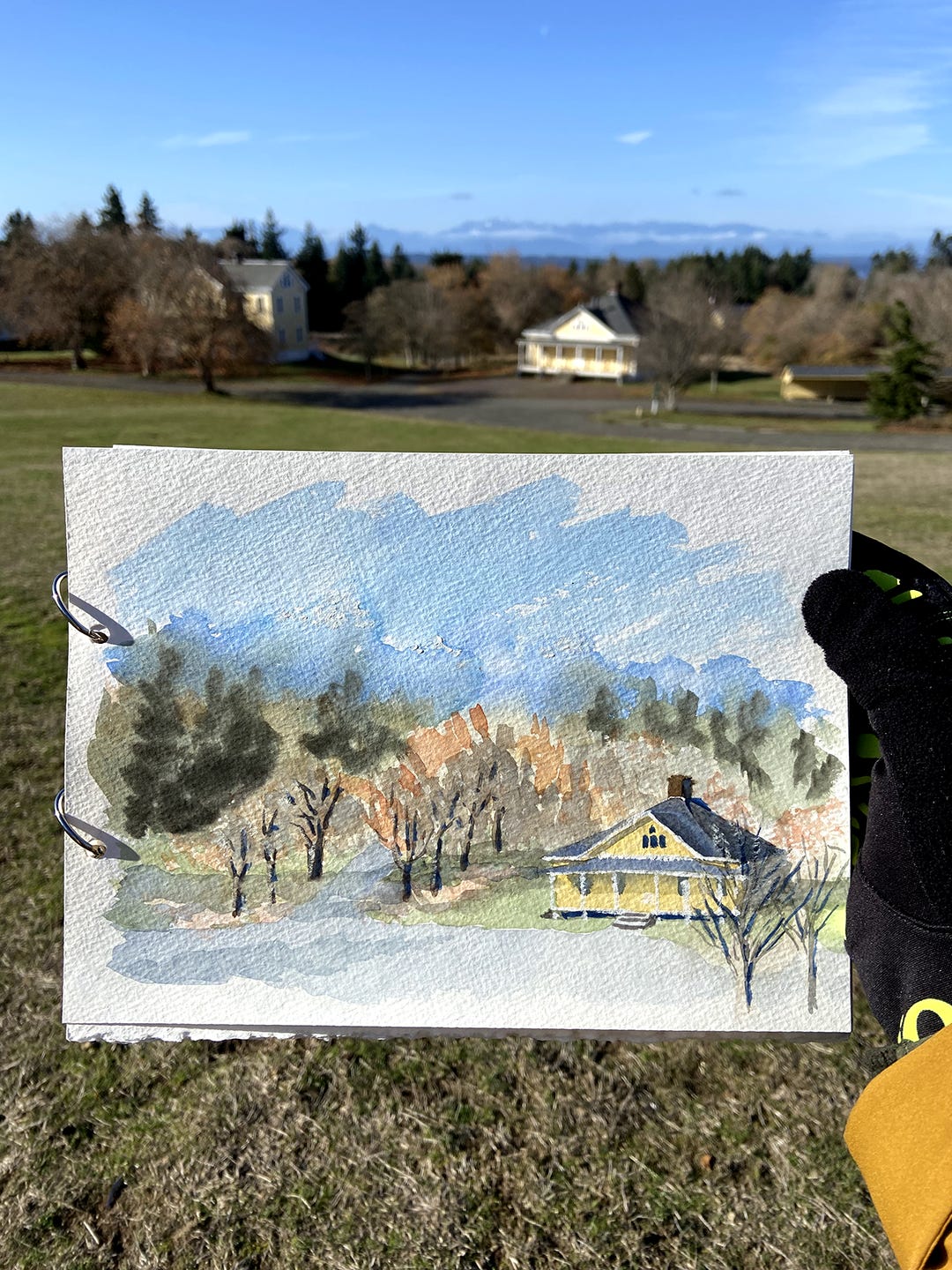
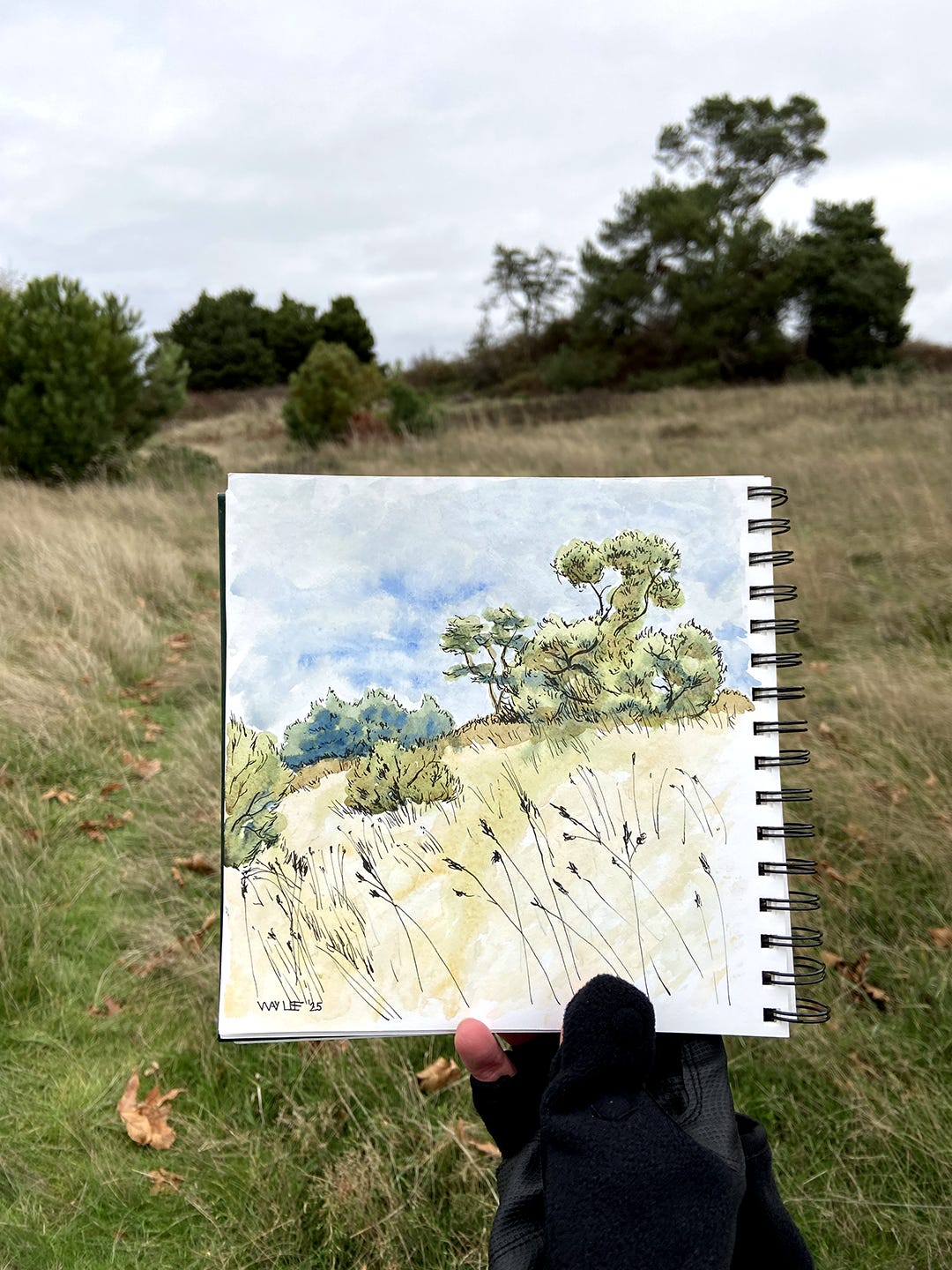
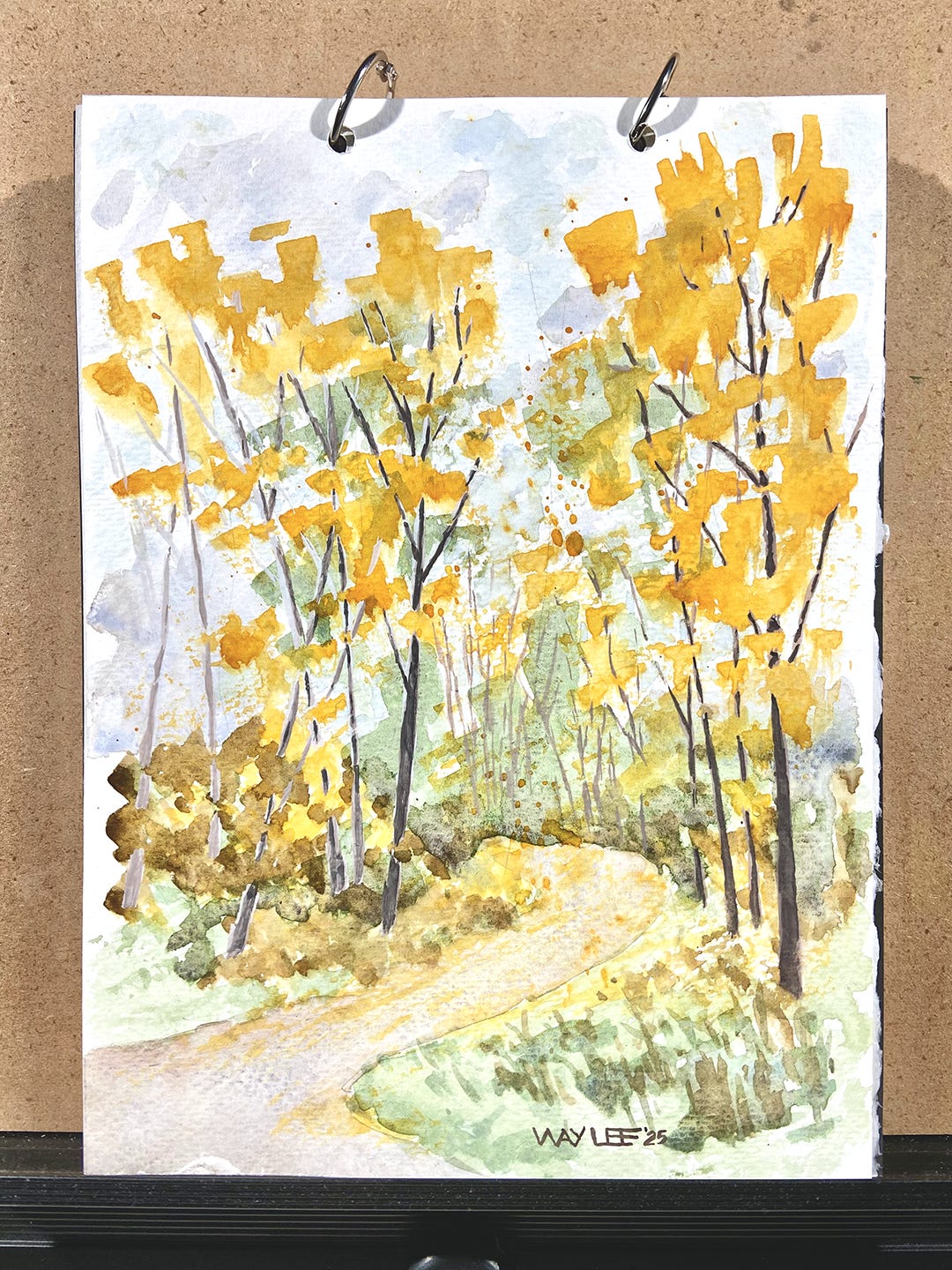
Sketchbook Share
And for now, I am continuing to focus on my art and trying to spend more time in nature, off of screens. I’m starting to get a good grasp of watercolor and be able to work more confidently with it! I still haven’t come to what my next series will be centered around, though. Exploration continues.

This academic paper has a footnote describing some of this mess: “Baring the Windigo’s Teeth: The Fearsome Figure in Native American Narratives”, Carol Edelman Warrior. https://digital.lib.washington.edu/server/api/core/bitstreams/b63655fa-84ce-48f7-b180-6531bbc5ea98/content
“310. I’m obliged to Chelsea Vowel’s blog post, “Check the tage on that ‘Indian’ story,” âpihtawikosisân, posted Feb 2012, entitled “Check the tag on that ‘Indian’ story.” http://apihtawikosisan.com/2012/02/21/check-the-tag-on-that-indian-story/. Vowel cites “Pavor Nocturnus,” the name of a Tumblr blog, whose author published her/his research on the good wolf/bad wolf story’s provenance. See http://tsisqua.tumblr.com/post/17650658915/the-history-of-the-two-wolves-two-dogs-story. At the time that Vowel published, Billy Graham was cited as the originator of the story in his book, The Holy Spirit: Activating God’s Power in Your Life. (1978). However, the Tumblr page, “Pavor Nocturnus” has been updated since then, and now he/she says the earliest known appearance of the story is from The Power of Positive Praying by John Bisagno (1965). One website, however, credits George Bernard Shaw (1856-1950) for the story. See: http://www.goodreads.com/quotes/73699-a-native-american-elder-once-described-his-own-inner-struggles. Goodreads does not indicate when or where Shaw said such a thing, and I have not been able to find a verifiable source. All of the earliest known published versions of the story, and even the versions claimed to have been heard by anonymous participants in discussion threads such as the one found on Google Answers at http://answers.google.com/answers/threadview?id=321024 are unverifiable, and are always attributed to a pastor, missionary, or Sunday School teacher, who indicate that a Native American convert to Christianity originally told the story. It appears that every teller seems to choose a different tribal affiliation for the elder in the story.”
From what I can tell, the story is apocryphal so I’m not sure there are any more official versions of it than the one you will write yourself.
The watercolours are amazing. Something I always want to revisit but have never done it consistent enough to improve.